Slab Leak Repair in Plano, TX
Slab leak repair in Plano, TX means locating and fixing a water supply line that leaks beneath a home's concrete foundation. Work typically begins with leak detection, followed by targeted access and either a pipe repair or a reroute. We connect Plano residents with providers who explain the options before any work begins.
What Slab Leak Repair in Plano Covers
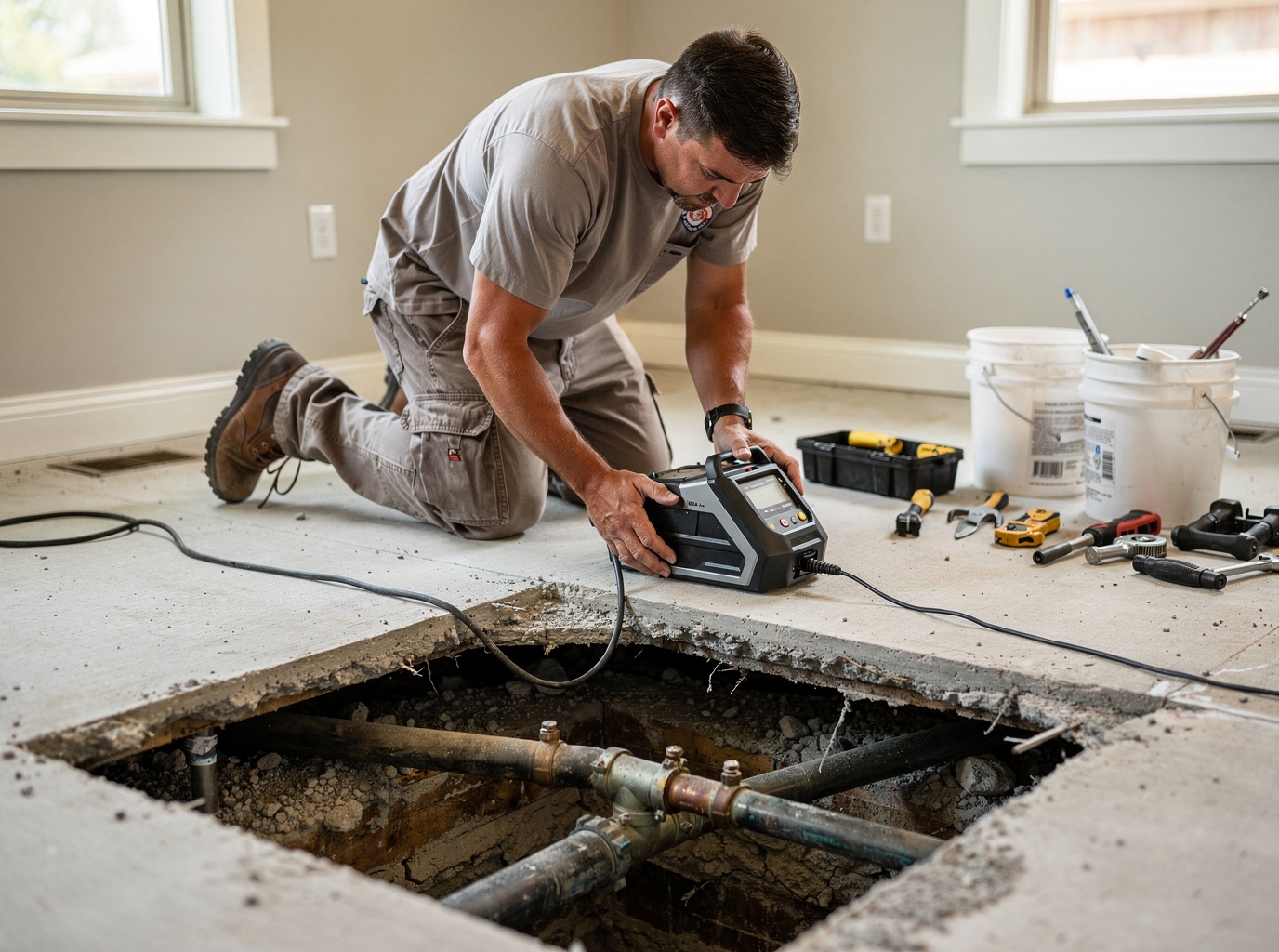
Slab leak repair addresses water supply and drain lines that run through or beneath the concrete slab that supports many homes in Plano. In a typical house, the main supply line enters near the foundation and branches toward kitchens, bathrooms, and laundry areas. When one of these lines develops a pinhole, a cracked joint, or a failed fitting, water escapes into the soil or under flooring, often without any obvious surface sign. The service exists to find that exact source, decide how to reach it with the least disruption, and restore dependable water flow to the home.
The scope of the work usually includes confirming that a leak exists, pinpointing its location, opening a safe path to the damaged pipe, repairing or replacing the affected section, and testing the line under pressure before anything is closed up. Some projects also involve rerouting a segment of the supply through walls or the attic so that the leaking portion is bypassed. Each approach carries different trade-offs in disruption, time, and long-term durability, which is why the providers we connect you with typically explain the options before recommending one.
It helps to understand that slab leak repair is a diagnosis-first service. A provider who starts cutting before confirming the source may open more concrete or flooring than necessary. A careful provider uses listening tools, pressure readings, and the age and material of your plumbing to narrow the problem first. Knowing what the service covers before work begins makes it easier to compare conversations and set realistic expectations for the home.
Warning Signs That Slab Leak Repair Plano Is Needed
Slab leaks rarely announce themselves clearly, which is why the warning signs matter. The most common early clue is a water bill that rises without any clear change in household use, such as more guests, a new appliance, or longer showers. Another clue is the sound of running water or a faint hiss when every fixture in the home is turned off. Some residents also notice that the water meter continues to move during periods when no water is being used.
Signs inside the home often appear as the leak continues. Floors that feel warm in one spot, particularly tile or hardwood laid over the slab, can indicate hot water escaping from a line beneath. Carpet that feels damp or soft, a musty smell in one room, cracks in flooring or along baseboards, or water pooling where no spill occurred are all reasons to schedule an inspection. Doors that begin to stick or gaps that suddenly open can also reflect slab movement caused by saturated soil.
Changes in water pressure are another useful clue. If showers or faucets that once ran strong now slow down, or if pressure drops only at certain fixtures, a leak in the supply line may be part of the cause. Outdoors, a patch of lawn near the foundation that stays unusually green, stays soft, or stays wet after the sprinklers have been off may point to water traveling from a buried line. Any combination of these signs is a reason to have the plumbing evaluated instead of waiting.
A small leak caught early generally involves less disruption than one that has soaked the soil, undermined the slab, or damaged finished flooring. If you notice more than one sign, note when each began, keep copies of recent water bills, and share those details with the provider when you request a visit.
Sub-services Within Slab Leak Repair Plano, TX
Slab leak repair includes several related sub-services, and each one addresses a different part of the problem. Leak detection uses listening equipment, pressure testing, and in some cases thermal imaging to locate the source while disturbing as little of the floor as possible. Pressure testing isolates whether the leak sits in a supply line, a drain line, or a fitting, which helps the provider decide where to focus the work.
Spot repair is the sub-service used when the leak is confined to a short section of pipe. The damaged length is cut out and replaced, the joints are sealed or fitted with connectors suited to the material, and the line is retested. Rerouting is used when the leak sits under a difficult area or when a permanent bypass is preferable. New pipe is run above the slab through wall cavities or attic space, and the old section is capped and left in place.
Repiping is a broader sub-service that replaces longer runs of supply line when the existing material is aging, when several leaks have occurred, or when the layout makes repairs impractical. It is usually discussed only after a condition assessment. Drain-related slab work is handled differently, because drain lines have slope and venting requirements that must be preserved, so providers may recommend a separate evaluation for those lines.
Restoration work, such as patching concrete, replacing flooring, drying out affected materials, or repairing drywall, is sometimes handled by separate trades. The providers we connect you with can tell you which of these items are part of their scope and which may require coordination with another specialist, so you know who is responsible for each step.
How Slab Leak Repair Plano Projects Are Done, Step by Step
The process begins with an initial visit. The provider asks about symptoms, when they started, recent water bills, and the age of the home's plumbing. The technician then checks the water meter with all fixtures off, watches whether it moves, and may shut off sections of the home to narrow down which line is losing water. This stage helps confirm whether a leak is likely before any opening is made.
The second step is detection. Once the suspect line is identified, the technician applies pressure or uses listening equipment to pick up the sound of escaping water through the slab. Pressure readings help confirm the leak and sometimes indicate its approximate distance from a known access point. Careful detection decides whether the next step will be a small, targeted opening or a larger one, so it deserves patience.
The third step is access. Based on the leak location and the home's layout, the provider chooses between a small opening in the floor, a wall cut for a reroute, or a combination of both. A responsible provider explains the trade-offs before cutting, including how the opening will be closed, how long the area will be unusable, and what protection will be used for finished surfaces.
The fourth step is repair. The damaged pipe is removed, and the replacement section is fitted with fittings suited to the material in the home. Joints are checked for alignment and secured. The fifth step is testing. The repaired line is pressurized and monitored for a period to confirm the fix holds, and any issues are corrected before the work moves on.
The sixth step is closing up. Openings are patched, the area is cleaned, and any debris is removed. The provider should check the area for remaining moisture and then walk you through what was done, what was replaced, and what to watch for in the coming weeks.
What's Included in Slab Leak Repair Plano, TX Projects
The scope included in most slab leak repair projects typically covers the diagnosis of the leak, the labor needed to access and repair the damaged line, the replacement pipe and fittings used in the repair, pressure testing after the fix, and basic cleanup of the work area. The exact list depends on the provider, the leak location, and the condition of the plumbing, so it should be confirmed in writing before work begins.
Items that are often outside the basic plumbing scope include concrete saw cutting and slab patching, replacement of finished flooring such as tile, wood, or carpet, drywall and cabinet repair, landscaping restoration, and water damage remediation. These may be offered by the provider as an add-on or handled by a separate trade. A clear written scope lets you compare providers on the same terms rather than on the first line of a conversation.
Ask whether the provider documents the leak location with notes or photographs and whether they share those records with you. Documentation is useful for future work on the home, for any insurance conversations where relevant, and for follow-up visits. Also ask which pipe material will be used, whether the new section matches the existing system, and whether any remaining aging sections should be flagged for future planning.
Finally, confirm the follow-up process. Ask whether the provider offers a check-in visit after the repair, how you can report a concern if moisture appears, and who to contact for questions about finishes or landscaping. Clear answers to these questions reduce confusion if the home needs attention again later.
Local Context and Next Steps for Slab Leak Repair in Plano, TX
Plano sits in North Texas, where expansive clay soils expand and contract with changes in moisture. Dry summers and heavy rain periods can shift a slab over time, which can stress joints, fittings, and older pipe. Hot summers also mean irrigation runs often, and sprinkler water can mask or mimic leak signs in the yard. Many neighborhoods across the city include homes built on slab foundations, so the warning signs described on this page apply widely across Plano.
Cold weather is another local factor. Winters are usually mild, but occasional hard cold snaps can stress exposed lines in garages, crawl spaces, or exterior walls. Insulating vulnerable pipes and keeping a steady indoor temperature during cold periods are simple habits. Homes with older galvanized or early plastic plumbing may also benefit from a condition feedback, since aging materials are more likely to develop leaks.
Prevention starts with routine habits. Check the water meter periodically when no water is being used, note any sudden change in your bill, and keep irrigation heads and valves in good working order. Avoid overwatering beds that sit directly against the foundation, and make sure grading and downspouts direct rainwater away from the slab. These steps do not replace professional evaluation, but they help you notice trouble earlier.
Next steps are straightforward. Write down the symptoms you have seen and when they started, gather recent water bills, and take photographs of any visible damage. Then contact the providers we connect you with to request a visit. Ask them to explain how they will detect the leak, which repair method they recommend, what is included, and what is excluded. Comparing clear explanations is more useful than comparing first impressions.
Questions about Slab Leak Repair in Plano, TX
How do I know if I have a slab leak in Plano?
Common signs include a water bill that rises without explanation, sounds of running water when fixtures are off, warm or damp floors, and reduced pressure at certain fixtures. A provider can confirm the leak with detection testing.
Does slab leak repair always require breaking concrete?
No. Depending on where the leak sits and how the home is laid out, a provider may recommend rerouting the line above the slab instead. The options should be explained before any work begins.
How long does a slab leak repair usually take?
Timing depends on the leak location, the access method, and the condition of the pipe. The provider can explain the expected schedule after the initial visit and inspection.
Will the provider also replace flooring or concrete?
Some providers include limited patching, while flooring and concrete finishing are often handled by separate trades. Ask for the scope in writing so you know who is responsible for each part.
What can I do to lower the chance of another slab leak?
Check your water meter periodically, keep irrigation in good working order, avoid overwatering near the foundation, and have new warning signs evaluated early rather than waiting.
This Slab Leak Repair page covers the neighborhoods listed in the areas section of this site.